
Away from the distraction of its new high-profile politics, Wayanad's worries seemed very down to earth, discovers Shyam G Menon.

What we want from spectrum allocation is access to broadband networks at prices that will result in productivity gains.

The report by WaterAid states that 663 million people globally are without clean water and the vast majority of them -- 522 million -- live in rural areas.

Big-ticket investments taking off is crucial for Kerala given the years it lost to labour militancy courtesy the same political forces currently in power, explains Shyam G Menon.

Cargill believes the reforms would act as a catalyst in attracting private sector investment in building supply chains for taking Indian farm produce to national and global markets.
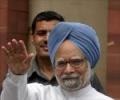
Terming as "grossly inadequate" the current judge to population ratio, Prime Minister Manmohan Singh assured chief ministers of more central funds for creation of infrastructure for subordinate judiciary to address the issue of pendency of over three crore cases.

Prime Minister Narendra Modi on Wednesday called for focus on 'repair and prepare' as the nation emerges out of a devastating pandemic. "Over the past year, we have witnessed a lot of disruption in different sectors. Much of it is still there. Yet, disruption does not have to mean despair," he said at VivaTech Summit. "Instead, we must keep the focus on the twin foundations of repair and prepare," he said referring to the need to augment healthcare infrastructure in the country as well as prop up the economy.

The Congress won 77 seats or 42% of seats in the 2017 polls. How then can Gujarat be called a BJP bastion, asks Sanjeev Nayyar.

Richest Indian Gautam Adani's ports-to-power-to-cement conglomerate is "deeply overleveraged" with the group predominantly using debt to invest aggressively across existing as well as new businesses, CreditSights, a Fitch Group unit, said on Tuesday. In a report titled 'Adani Group: Deeply Overleveraged', CreditSights said, "In the worst-case scenario, overly ambitious debt-funded growth plans could eventually spiral into a massive debt trap, and possibly culminate into a distressed situation or default of one or more group companies." Starting out as a commodities trader in the late 1980s, the Adani group has diversified from mines, ports and power plants into airports, data centers and defence.

The Budget would have been the perfect vehicle to introduce some bold initiatives.
That opportunity has been lost through this Budget, observes Shreekant Sambrani.

Someone who confessed he would have been beating buffaloes with sticks had it not been for the javelin went on to win India's first Olympic gold medal in athletics.

These firms owe Rs 13 trillion to lenders and account for 55% of all non-financial corporate debt.

If we are to realise the full potential of biologics' ability to improve people's health, it is essential to encourage public policy and support R&D.

On the list of 137 economies, Switzerland is followed by the US and Singapore in second and third places, respectively.
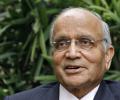
Company managements need to "curtail the kind of expenditures on themselves personally" with the COVID-19 pandemic highlighting the need to build internal resources with a frugal style of functioning, Maruti Suzuki India chairman R C Bhargava said on Tuesday. Addressing shareholders in the company's annual general meeting held virtually, he also termed as "a good development for the whole of industry" recent shareholder actions that did not approve expenditures by management on themselves, without specifying details. In the wake of the pandemic, building internal resources has to become a priority of industry and companies.

Experts say Indian students will have to accept that international space for them is shrinking.

Amid rupee sliding below 64 to a dollar, global agency Standard & Poor's on Tuesday said it will maintain negative outlook for the country as currency depreciation is adversely impacting investor confidence.

'The CEA suggested that could be as high as 19 per cent.'
The report further said at a time when there is increasing concern over the funding of infrastructure projects by private players, the government has come to the rescue and its push to drive infrastructure spending can sustain the space in the medium term. It further highlighted that private players are facing bottlenecks because at present their access to capital is constrained and complete drying up of equity funding as risk aversion took over.

How should one billion Indians, for whom deprivation has become an inescapable way of life, join us in celebrating 75 years of Independence? And where do we go from here? asks Kalyan Singhal.
It is incorrect to say that India was complacent and did not do adequate amount of work for containment of the second wave of the COVID-19 pandemic as no country was prepared for it, National Health Authority (NHA) CEO R S Sharma said on Thursday.

There could be a paucity of isolation and ICU beds, and ventilators, according to a study.

410 civil servants in a feedback survey to the Prime Minister's Office said that the curfew should stay till the pandemic is controlled and asked to increase fiscal spending on health infrastructure to around Rs 5-10 trillion.

Time and cost overruns have delayed 850 infrastructure projects out of a 1,035 during the period between 1992 and 2009, says a study.
Between 2010 and 2050 India is expected to add about 500 million to its 2011 urban population of 377 million.

BSNL, which was formed in 2000, was in the pink of financial health but lost to competition because of inadequate investment in infrastructure expansion that ought to have been provided during past few years, he told Rajya Sabha.
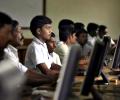
Indian IT major HCL Technologies will provide training for three months to 100 students each in its Lucknow and Madurai campuses.

Budget expectations of rural infrastructure sector.
India's inability to address infrastructure is legendary, barring historical exceptions. It shows in electricity shortages, inadequate sanitation, broadband, railway services, airlines and roads. This explores the common strands of such failures, and a possible alternative drawing on China's approach to development.
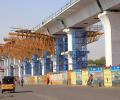
Investment in infrastructure was necessary for the economy, as power shortages, inadequate transport and poor connectivity affect overall growth performance, as per the Economic Survey 2019-20 tabled in Parliament by Union Finance and Corporate Affairs Minister Nirmala Sitharaman. "To achieve GDP of USD 5 trillion by 2024-25, India needs to spend about USD 1.4 trillion (Rs 100 lakh crore) over these years on infrastructure so that a lack of infrastructure does not become a constraint to growth," it said.

While the infection has been mild in most reported cases, those below two years of age are showing signs of acute infection.
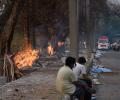
Shortage of ICU beds, oxygen, ventilators, vaccines, doctors, nurses and crematorium space in India has dominated headlines around the world in the past few weeks with Covid-19 cases surging beyond control and the government failing to deliver. Yes, election rallies, Kumbh Mela, blatant flouting of social distancing and mask protocols coupled with a messy vaccination process are said to be responsible for the health crisis of colossal proportions that India is facing today. But an analysis of Budget speeches made by finance ministers over 75 years also offers a glimpse of how low on the priority list healthcare has featured for the political class and policy-makers, which is a significant reason for the current situation.
Unless the dividend distribution tax is removed, India Inc's ability to finance investments will be severely compromised.

Even as India goes green, lack of uniform standards for setting up charging stations is holding back companies. Alnoor Peermohamed reports.

'The telecom companies are our lifeline now, despite having nearly collapsed under debt because of ill-advised policies.' 'Perhaps our obvious dependence on telecom services will spark well-conceived policies for this sector,' says Shyam Ponappa.

The electric vehicle evolution in India's passenger vehicle market has remained frozen in time and may see limited adoption over the next decade, experts say.

While the number of operational airports in the country will rise to 131, other smaller towns too are seeing a surge in connectivity.

Vaccine inequity remains an issue in India, where less than 2 per cent of the population has received a Covid booster

Kiran Mazumdar-Shaw talks to Nikita Puri about her book Mythbreaker.
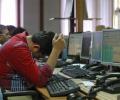
Stock exchanges and other market infrastructure institutions as well as their top officials are liable to face penalties for lapses in handling and recitfying technical glitches, with Sebi putting in a place a stricter compliance system driven by "financial disincentives". The markets watchdog has come out with a detailed Standard Operating Procedure (SOP) for Market Infrastructure Institutions (MIIs) less than five months after a technical glitch halted trading at the country's largest bourse NSE for nearly four hours. There will be a "financial disincentives" structure for MIIs -- stock exchanges, clearing corporation and depositories -- for any business disruption beyond pre-defined time, according to a circular issued on Monday.
 © 2026 Rediff.com - Advertise with us - Disclaimer - Privacy Policy - Sitemap - Feedback - About us - Terms of use - Grievances